𝗧𝗵𝗲 𝗘𝗰𝗼𝗻𝗼𝗺𝗶𝗰 𝗜𝗺𝗽𝗮𝗰𝘁 𝗼𝗳 𝗡𝗼𝗻𝗽𝗿𝗼𝗳𝗶𝘁𝘀 𝗶𝗻 𝗡𝗶𝗴𝗲𝗿𝗶𝗮

The money doesn’t stop moving when it enters a nonprofit. It moves from the organisation into communities, businesses, households and the wider economy.
‎
‎Think about it: salaries are paid, goods and services are purchased, consultants are engaged, training programmes are delivered, logistics are covered, and local vendors get business. Every activity triggers an economic transaction, creating a chain of spending that extends far beyond the organisation itself.
‎
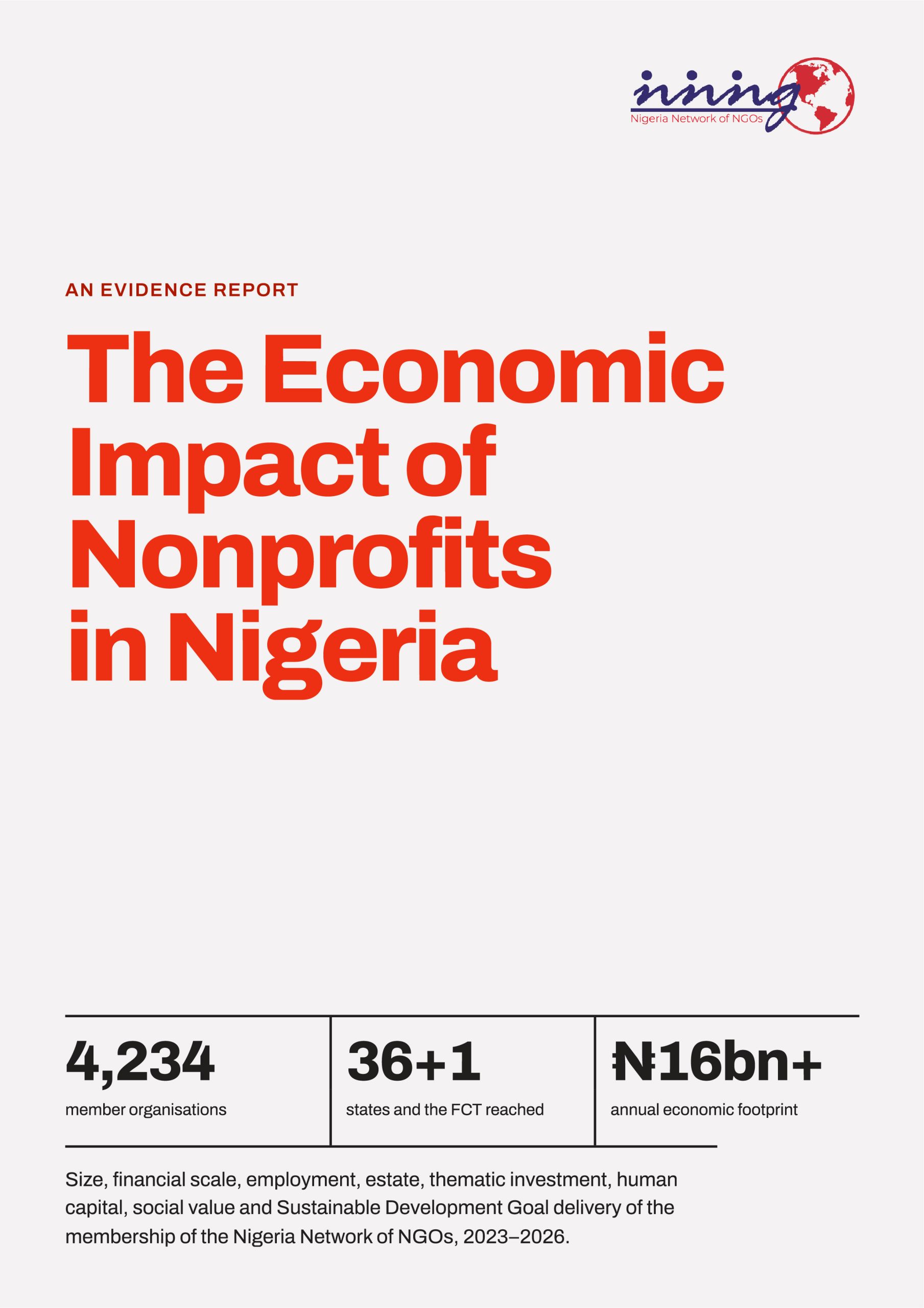
‎Through our recent report, 𝗧𝗵𝗲 𝗘𝗰𝗼𝗻𝗼𝗺𝗶𝗰 𝗜𝗺𝗽𝗮𝗰𝘁 𝗼𝗳 𝗡𝗼𝗻𝗽𝗿𝗼𝗳𝗶𝘁𝘀 𝗶𝗻 𝗡𝗶𝗴𝗲𝗿𝗶𝗮, we have a closer look at this often-overlooked dimension of the sector, examining how nonprofit operations create chain of economic activity, supporting livelihoods and contributing to the wider economy, creating value at every stop.
‎Nonprofit spending doesn’t end when a payment is made. It sets other economic activities in motion.

‎.
‎You may just want to click our – 𝗧𝗵𝗲 𝗘𝗰𝗼𝗻𝗼𝗺𝗶𝗰 𝗜𝗺𝗽𝗮𝗰𝘁 𝗼𝗳 𝗡𝗼𝗻𝗽𝗿𝗼𝗳𝗶𝘁𝘀 𝗶𝗻 𝗡𝗶𝗴𝗲𝗿𝗶𝗮 report! 💪
‎And that’s because the numbers are definitely telling a report worth reading.
‎Click in. Catch the story. And discover what the report reveals about the sector’s economic footprint
‎https://nnngo.org/the-economic-impact-of-nonprofits-in-nigeria/
‎
‎
‎.
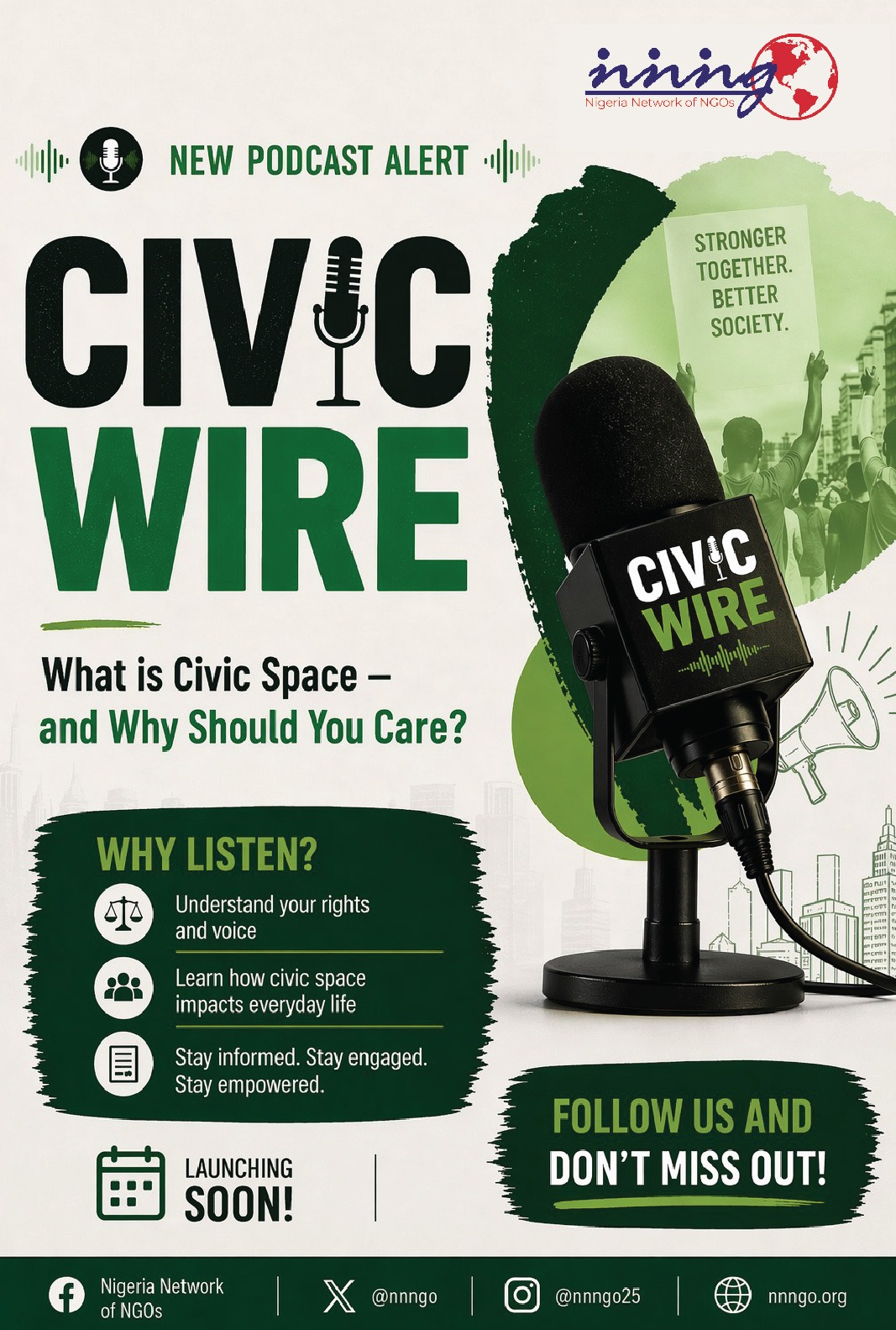
‎This is 𝗖𝗶𝘃𝗶𝗰 𝗪𝗶𝗿𝗲… Creating an enabling environment… Protecting the Civic Space
‎Learn more at: www.nnngo.org
‎
‎
‎
‎
‎Cc: @Network for Empowered Aid Response
West Africa Civil Society Institute (WACSI)
‎@TY Danjuma Foundation
Heinrich Böll Foundation – Abuja Office
‎@African Philanthropy Forum
Forus international
‎@Action for Sustainable Development
‎@USAID
‎@PALLADIUM
AFD – Agence Française de Développement
‎@Global Call To Action Against Poverty
‎@Small Media
‎@Global Partners Digital
‎@Techsoup
‎@EU SEE
‎@Nigeria Strengthening Civic Advocacy and Local Engagement
‎@Open Government Partnership
‎@Ford Foundation
‎@MacArthur Foundation
‎@CIVICUS
‎
‎
‎
‎#CallToAction
‎#CivicWire
‎#CreatingAnEnablingEnvironment
‎#ProtectingTheCivicSpace
‎#ExpressionAssociationAssembly
‎#WorldHumanitarianDay2026
‎#LeavingNoOneBehind
‎#SustainableDevelopmentGoals
‎#GlobalGoals
‎

𝗧𝗵𝗲 𝗘𝗰𝗼𝗻𝗼𝗺𝗶𝗰 𝗜𝗺𝗽𝗮𝗰𝘁 𝗼𝗳 𝗡𝗼𝗻𝗽𝗿𝗼𝗳𝗶𝘁𝘀 𝗶𝗻 𝗡𝗶𝗴𝗲𝗿𝗶𝗮

Last week, we released 𝗧𝗵𝗲 𝗘𝗰𝗼𝗻𝗼𝗺𝗶𝗰 𝗜𝗺𝗽𝗮𝗰𝘁 𝗼𝗳 𝗡𝗼𝗻𝗽𝗿𝗼𝗳𝗶𝘁𝘀 𝗶𝗻 𝗡𝗶𝗴𝗲𝗿𝗶𝗮 – a report examining the sector’s contribution beyond the programmes, campaigns, and community interventions it delivers.
The report estimates that the sector supports between 3,100 and 6,900 full-time-equivalent paid posts, with a central estimate of about 4,400; while our modest model report estimates about 4.9 million volunteer hours each year. That is equivalent to roughly 2,700 full-time posts.
‎
‎From employment and volunteer contributions to the people and skills that keep organisations running, our report gave a closer look at the economic value of Nigeria’s nonprofit sector.
‎
‎In this edition of 𝗖𝗶𝘃𝗶𝗰 𝗪𝗶𝗿𝗲, we further gave a wider view of the people behind the programmes, the workforce driving community impact, and the often-overlooked economic contributions of the Third sector in Nigeria.
‎
‎The impact of nonprofits goes beyond the lives they change, it extends to the livelihoods they support, the skills they build, the work they create, and the value they contribute to Nigeria’s economy.
‎
‎You may just want to click it! 💪
‎And that’s because the numbers are definitely telling a report worth reading.
‎Click in. Catch the story. And discover what the report reveals about the sector’s economic footprint
‎https://nnngo.org/the-economic-impact-of-nonprofits-in-nigeria/

‎
‎.
‎This is 𝗖𝗶𝘃𝗶𝗰 𝗪𝗶𝗿𝗲… Creating an enabling environment… Protecting the Civic Space.

PRESS RELEASE – Nigeria’s Nonprofits Generate ₦16.4–17.5 Billion Annual Economic Footprint, New Evidence Report Finds

Nigeria’s Nonprofits Generate ₦16.4–17.5 Billion Annual Economic Footprint, New Evidence Report Finds


Conservative estimates from 4,234 NNNGO member organisations present in every state and the FCT show a substantial, under-recognised economic contribution and open a national conversation on the true economic weight of the sector


LAGOS, Nigeria, 22 October 2026/APO Group/ —


The Nigeria Network of NGOs (NNNGO) today released The Economic Impact of Nonprofits in Nigeria, an evidence report quantifying the economic contribution of its 4,234 member organisations. Present in all 36 states and the Federal Capital Territory, the membership carries a combined annual operating income of at least ₦11.7 billion (approximately ₦12.5 billion across the full membership). With supply-chain and wage effects applied using a conservative 1.4 multiplier, the total annual economic footprint is estimated at ₦16.4–17.5 billion, with a plausible range of ₦14–22.5 billion.


“Nigeria’s nonprofits are not merely providers of social services. They are serious economic actors — employers, customers of local businesses, and generators of further activity across every state,” said Oyebisi Babatunde Oluseyi, Executive Director of the Nigeria Network of NGOs. “While the limitations of the data are real and the figures may not capture the full scale of the sector, what this report offers is the start of a national conversation on the true economic impact of the nonprofit sector. It signals the economic footprint of the sector and is a true reflection of where Nigerian nonprofits are creating both social and economic value. Recognising and measuring this contribution more fully is the first step to resourcing civil society in proportion to the value it creates.”


The report draws on four evidence bases: the NNNGO membership database; an inventory of nonprofit and civil society events held between 2023 and mid-2026; a verified review of Nigerian university programme pages; and documented member impact features mapped to the Sustainable Development Goals. Key findings include:


Employment: 3,100–6,900 full-time-equivalent paid posts, plus volunteer effort equivalent to roughly a further 2,700 posts. The paid workforce is drawn in part from a pipeline spanning 13 universities and five academic disciplines, although no Nigerian university yet offers a dedicated nonprofit-management degree.


Local economic circulation: Significant recurring demand for hospitality, aviation, catering, transport, printing, professional services, commercial space (estimated ₦1.3–3.2 billion annually) and near-universal telecommunications and internet services. Events alone generate an estimated ₦0.9–2.7 billion in annual local spending.


Thematic investment: Education-focused organisations hold the largest pool of resources at ₦4.84 billion. Advocacy organisations are the most capitalised on average (₦3.67 million).


SDG delivery: Documented member impact features address 12 of the 17 Sustainable Development Goals, with local organisations frequently serving as the last-mile delivery mechanism that neither government nor the market reliably reaches.


The report is explicit about its limitations. Budgets are self-reported in bands rather than audited, the open top band is valued at a conservative floor, and the data covers one large network rather than every nonprofit in Nigeria.


Almost every limitation identified points toward understatement. Yet even with these caveats, the evidence signals a clear economic footprint and accurately reflects the areas in which the sector is generating both social and economic value. On top of the measurable market footprint sits social value — in education, health, livelihoods, inclusion, democracy and the rule of law — that cannot be fully reduced to a monetary figure and adds to, rather than competes with, the economic case.


The full report is available for download on the NNNGO website.


——————————–

About the Nigeria Network of NGOs (NNNGO)


The Nigeria Network of NGOs is the national platform for civil society organisations in Nigeria. Since 2012 it has grown from approximately 600 to more than 4,200 member CSOs, working to strengthen the enabling environment for nonprofits, advance self-regulation, and amplify the collective voice of civil society on issues of governance, development and civic space.


Media Contact


Nigeria Network of NGOs

Email: nnngo@nnngo.org 

Website: www.nnngo.org 

Difficulties in Accessing TikTok in Parts of Northern Nigeria

Statement by the Nigeria Network of NGOs

Abuja, 5 October 2026

On reported difficulties in accessing TikTok in parts of northern Nigeria, and their implications for freedom of expression, access to information and the work of civil society

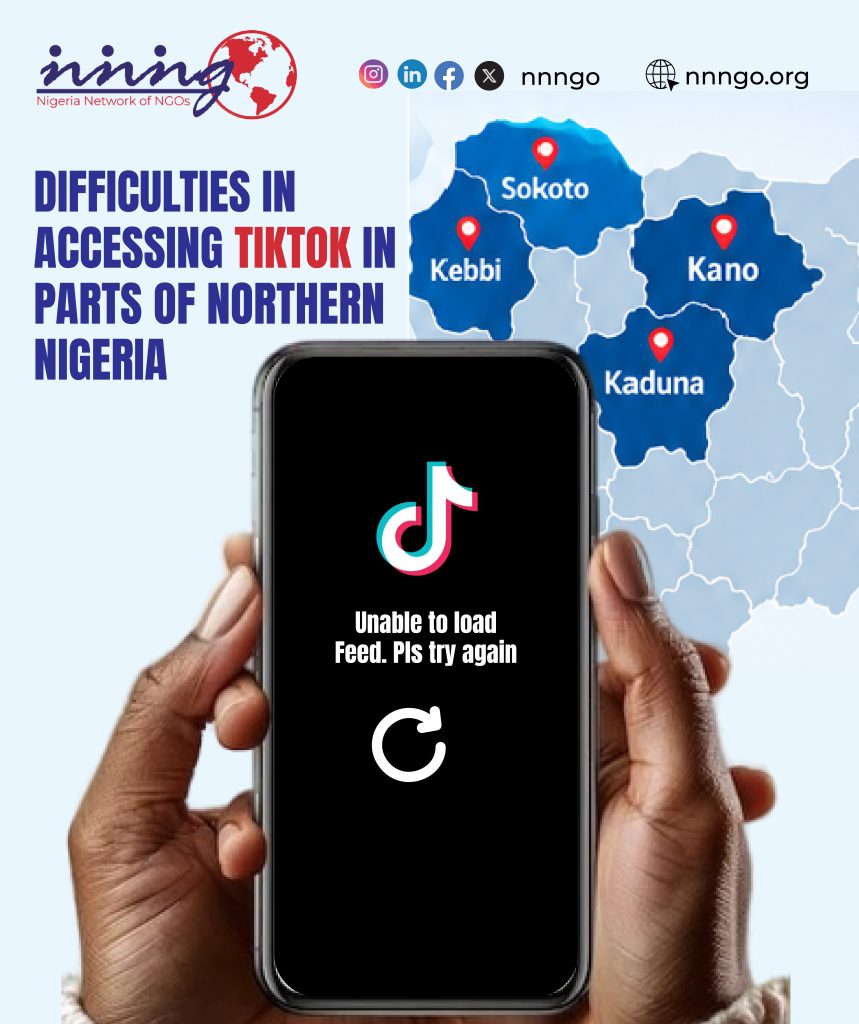
The Nigeria Network of NGOs notes with concern credible and consistent reports, dating from around mid-September 2026, of prolonged difficulty in accessing TikTok through ordinary mobile-data networks in Kaduna, Kano, Kebbi and Sokoto States. Users have described feeds that fail to load, videos that will not play and uploads that stall, while access is in many cases restored through virtual private networks. The disruption appears to cut across networks and has not been accompanied by a public explanation.

Available information does not yet establish whether these difficulties arise from a technical fault, a routing or platform-side problem, a traffic-management measure, or an intentional restriction. Neither public authorities nor civil society should reach conclusions that the technical record does not support. Unexplained interference with a widely used communications platform is nevertheless a matter of public interest. It engages the rights to freedom of expression and to seek, receive and impart information, as affirmed in Article 19 of the Universal Declaration of Human Rights and Article 19 of the International Covenant on Civil and Political Rights, and as elaborated by the Human Rights Committee in General Comment No. 34 and by the Human Rights Council in its resolutions on the promotion, protection and enjoyment of human rights on the Internet.

The effects are not confined to entertainment or private communication. In the affected states, TikTok has become a channel through which young people, community journalists, creators and small enterprises exchange information and sustain livelihoods. For nonprofit organisations, the same channel has become part of ordinary civic infrastructure. Prolonged loss of access impairs:

  • Community outreach and public-information campaigns, including on health, education, humanitarian need and civic participation, where short-form video is often the most effective means of reaching audiences who do not use other platforms.
  • Beneficiary feedback and early warning, as community volunteers and local partners use the platform to surface service gaps, protection concerns and local incidents.
  • The visibility and resource mobilisation of smaller and community-based organisations, many of which lack paid media budgets and rely on organic reach to recruit volunteers, explain their work and account to the communities they serve.
  • Journalism, documentation and public accountability, where citizen reporting and nonprofit communications depend on timely publication and circulation.
  • The livelihoods of creators and micro-enterprises whose income is tied to the platform, with downstream effects on household resilience in already constrained local economies.

Taken together, these effects narrow the space in which civil society can inform, mobilise and be held to account. They fall most heavily on organisations and communities with the least capacity to route around a disruption.


NNNGO therefore calls on the Nigerian Communications Commission, relevant telecommunications providers, TikTok and other competent authorities — including, as appropriate, the National Information Technology Development Agency — to conduct and publish an independent technical investigation. That account should state the locations and networks affected, the cause and duration of the disruption, whether any official directive was issued, and the measures taken to restore service and prevent recurrence. Testing should be capable of distinguishing domain or Internet Protocol blocking, DNS interference, throttling, routing abnormalities and application-specific filtering.


Any restriction on access to a digital platform must have a clear legal basis and meet the requirements of legitimacy, necessity, proportionality and due process. Blanket or indefinite interference with a communications service is inherently difficult to justify. Users, journalists, researchers and nonprofit workers who lawfully document service disruptions — including through legitimate network measurement or the use of virtual private networks — must not face reprisals.


The Network stands ready to support evidence gathering, constructive engagement with regulators and operators, and the development of a transparent national protocol for responding to major digital-service disruptions, so that future incidents are explained promptly, remedied swiftly and never imposed outside the law.

Good Governance

What causes a nonprofit organisation to lose public trust?
‎
‎Is it a lack of funding… or a lack of good governance?
‎
‎A recent assessment by the West Africa Civil Society Institute, in partnership with the Nigeria Network of NGOs, surveyed 693 civil society organisations and found that 76.3 percent had not conducted a formal programme evaluation in the previous two years, while 86 percent operated without a written fundraising plan. The findings point to governance and institutional gaps that can undermine accountability, transparency, and long-term sustainability.
‎
‎Strong governance is more than policies and procedures, it is the foundation of credibility. Donors, partners, and the communities organisations serve are more likely to place their trust in institutions that demonstrate transparency, strategic planning, sound financial management, and a commitment to learning and accountability.
‎
‎As funding becomes increasingly competitive, organisations cannot rely on good intentions alone. Building resilient institutions requires investing in governance systems that inspire confidence and ensure lasting impact.
‎
‎In this edition of Civic Wire, we examine the practical steps civil society organisations can take to strengthen institutional resilience, earn public trust, and maximise their impact.
‎.
‎
‎This is 𝗖𝗶𝘃𝗶𝗰 𝗪𝗶𝗿𝗲… Creating an enabling environment… Protecting the Civic Space
‎
‎More at: www.nnngo.org
‎
‎
‎
‎Cc: @Network for Empowered Aid Response
‎West Africa Civil Society Institute (WACSI) 
‎@TY Danjuma Foundation
‎Heinrich Böll Foundation – Abuja Office
‎@African Philanthropy Forum
‎Forus international
‎@Action for Sustainable Development
‎@USAID
‎@PALLADIUM
‎AFD – Agence Française de Développement
‎@Global Call To Action Against Poverty
‎@Small Media
‎@Global Partners Digital
‎@Techsoup
‎@EU SEE
‎@Nigeria Strengthening Civic Advocacy and Local Engagement
‎@Open Government Partnership
‎@Ford Foundation
‎@MacArthur Foundation
‎@CIVICUS
‎
‎
‎
‎#CallToAction
‎#CivicWire
‎#CreatingAnEnablingEnvironment
‎#ProtectingTheCivicSpace
‎#ExpressionAssociationAssembly
‎#LeavingNoOneBehind
‎#SustainableDevelopmentGoals
‎#GlobalGoals

SB.1034: Why Nigeria’s Civil Society Should Be Watching the Foreign Aid Regulation Bill Closely

Analysis prepared by the Nigeria Network of NGOs (NNNGO) Regulatory Team


A new bill before the Senate would create a federal commission with sweeping powers to register, audit and sanction every organisation in Nigeria that receives foreign aid — including NGOs and CSOs. On paper, it is about transparency. In practice, it duplicates institutions that already do this work, threatens to reverse a hard-won reform the sector spent a decade securing, and revives a model Nigeria’s own Parliament has rejected four times before.
Here is what the sector needs to know.


What SB.1034 Actually Does

The Foreign Aid (Regulation, Coordination, Transparency and Disclosure) Bill, 2026 (SB. 1034), sponsored by Senator Ibrahim Hassan Dankwambo and passed for second reading on 22 July 2026, would establish a Foreign Aid Regulatory Commission (FARC). Every recipient of foreign aid — federal and state government, NGOs, CSOs and private entities alike — would be required to:

  • Register with FARC within 30 days of receiving aid, with non-registration a criminal offence;
  • Publicly disclose the source, amount, purpose, conditions and implementing partners of every grant, on a new national register;
  • Submit to a mandatory annual independent audit, on top of existing obligations; and
  • Align funded projects with government development priorities, enforced through fines of up to ₦20 million and up to five years’ imprisonment.

The stated aim — preventing diversion and misuse of foreign assistance — is legitimate. The design is where the problems start.


Five Things the Sector Should Know

  1. 1. This is Nigeria’s fourth attempt at an NGO commission — and each of the first three failed
    SB.1034 is not a new idea. A dedicated commission to supervise and monitor NGOs was proposed in 2016, 2017 and again in 2019/2020. Each version lapsed at committee stage after sustained advocacy from civil society and the public, on substantially the grounds set out below: registration burdens, criminal sanctions, and unchecked regulatory discretion. SB.1034 revives the same institutional model under a different long title, applied this time to “foreign aid” rather than NGO activity in general.

  2. 2. The register the Bill wants to build already exists — and is already public
    Clause 8 of the Bill calls for a new “National Foreign Aid Register.” Nigeria already has one. The Federal Ministry of Budget and Economic Planning operates the Nigeria Development Cooperation Dashboard (ndcd.ng), a live, publicly accessible database built on the international IATI transparency standard. It already tracks aid disbursements by donor — including NGO-channelled funders such as Action Aid, Christian Aid, Catholic Relief Services, Oxfam, Save the Children and Mercy Corps — broken down by sector, by ministry, by National Development Plan pillar, by SDG goal and by state. The dashboard is designed to support government and parliamentary oversight of external finance. A functioning public system already performs most of the transparency functions the Bill proposes.
    In other words: the transparency deliverable SB.1034 promises is not a gap to be filled. It is a system that already exists and already works on an internationally recognised standard.

  3. 3. SB.1034 would undo a reform the sector spent nearly a decade winning
    This is the point NNNGO’s members will feel most directly. For years, Nigerian NGOs were treated as high-risk “Designated Non-Financial Businesses and Professions” under the anti-money-laundering regime, obliged to register with the EFCC’s Special Control Unit Against Money Laundering (SCUML) and comply with reporting rules designed for pawnbrokers and car dealerships. Following a sector-wide risk assessment led by SCUML from 2022, and the Financial Action Task Force’s November 2023 revision of Recommendation 8 which requires governments to take a targeted, risk-based approach to non-profits rather than blanket regulation Nigeria removed NGOs from that reporting-entity list. At the 3rd Africa High-Level Civil Society AML/CFT Conference in Abuja in July 2026, this was credited to ten years of sustained civil-society advocacy. SB.1034 would reintroduce, through FARC, substantially the same registration, reporting and sanctions burden, just via a different institutional door. This is not duplication. It is regression.

  4. 4. The Bill treats government money and private donations as the same thing — and that is a constitutional and human rights problem, not just a drafting quirk
    Government-received foreign aid is public revenue. Under sections 80–89 of the 1999 Constitution, control of public funds sits with the National Assembly, and the Auditor-General for the Federation already has a constitutional mandate to audit how it is spent. A grant from a foundation, a diaspora donor, or an international NGO to an independent Nigerian CSO is a different thing entirely: it is private income, and how an association seeks, receives and uses it is protected as part of the right to freedom of association.

    Nigeria has bound itself to that protection twice over. It ratified the International Covenant on Civil and Political Rights (ICCPR) in 1993, Article 22 of which the UN’s own Special Rapporteur on freedom of association has interpreted to include the right of associations “to seek, receive and use resources — human, material and financial — from domestic, foreign and international sources.” Nigeria has also domesticated the African Charter on Human and Peoples‘ Rights through the African Charter on Human and Peoples’ Rights (Ratification and Enforcement) Act, Cap. A9, giving the Charter’s own protection of associational freedom (Article 10) the force of ordinary Nigerian law — a status the courts have treated as carrying particular weight precisely because it gives domestic effect to an international human rights obligation.


    SB.1034 does not distinguish between these two categories of money at all. Clause 2 applies a single registration, audit, disclosure and criminal-sanctions regime to federal ministries and to independent CSOs in the same breath. Extending the logic that governs public funds under the Constitution onto private donations to associations is, in effect, treating a constitutionally protected right as if it were merely another line item in the national accounts. That is the constitutional and human rights problem sitting underneath every other issue in this Bill — the duplication, the criminal penalties, and the reversal of the SCUML reform are all downstream symptoms of this one conflation at Clause 2.

  5. 5. NGOs already report— SB.1034 would add more
    Nigerian NGOs already register as incorporated trustees with the Corporate Affairs Commission (CAMA 2020, Part F) and, as “public interest entities,” already file audited, IFRS-aligned financial statements with the Financial Reporting Council of Nigeria, complete with CEO/CFO certification and FRC-imposed sanctions for non-compliance. FARC would be another sanctions regime for the same underlying conduct — the kind of “onerous vetting rules… not applied to the corporate sector” that the African Commission’s own Guidelines on Freedom of Association and Assembly in Africa specifically caution governments against.


What Other Countries Show Us

Nigeria is not choosing between transparency and civic space — other countries have already tested both paths:

  • India’s Foreign Contribution (Regulation) Act shows the cost of the restrictive model: over 20,700 NGO licences cancelled or lapsed since 2014, and a “partially compliant” rating from the FATF in 2024 on NPO safeguards.

  • Kenya’s Public Benefit Organizations Act 2013 shows a workable alternative: transparency and anti-abuse safeguards delivered through a co-regulatory model, with a self-regulating federation of NGOs sharing supervisory responsibility rather than a purely punitive state commission.


What Should Happen Next

This analysis is not an argument against transparency in foreign aid. It is an argument that Nigeria already has the tools to achieve it — and that SB.1034, as drafted, would build a costly, duplicative and legally vulnerable structure on top of them.


Get Involved

NNNGO members with views on SB.1034 are encouraged to engage directly with the Senate Committee on Public Accounts and the House Committee on Civil Society and Development Partners ahead of the Bill’s public-hearing stage.

Holding Power Accountable: How CSOs and Journalists Can Collaborate

How can Civil Society Organisations (CSOs) and journalists work together to strengthen transparency, promote accountability, and amplify citizens’ voices?

In this engaging radio conversation, Mr. Oyebisi B. Oluseyi shared valuable insights on the critical role of collaboration between civil society and the media in advancing good governance and democratic accountability.

Originally aired on April 6, 2026, on Radio 103.5 FM, and hosted by PureGold, this discussion explores how partnerships between CSOs and journalists can drive informed public discourse, encourage civic participation, and hold power to account.

🎧 Listen to the full recording and join the conversation on building a more transparent and accountable society.

Nigeria’s New Tax Laws: Seven Things Every Nonprofit Should Do Now

Nigeria’s New Tax Laws: Seven Things Every Nonprofit Should Do Now
By Ayo Adebusoye Esq, Nigeria Network of NGOs (NNNGO)

For many years, nonprofit organisations in Nigeria have operated with the understandable assumption that being “not-for-profit” automatically meant being outside the tax system. While charitable organisations continue to enjoy important tax exemptions under Nigerian law, the regulatory environment has changed significantly.

The message under Nigeria’s new tax regime is clear: tax exemption does not mean compliance exemption. Nonprofits are now expected to demonstrate higher standards of governance, financial transparency and regulatory compliance than ever before.

This is not merely a tax issue—it is a governance issue.
As Nigeria’s foremost membership body for civil society organisations, the Nigeria Network of NGOs (NNNGO) has spent decades helping nonprofits strengthen governance, accountability and regulatory compliance. From the Harmonised Code of Conduct for CSOs to the Nonprofit Operational Manual, the Nonprofit Self-Assessment Tool (NOPSAT), the recently published Nigeria Nonprofit Regulatory Framework: Key Laws (January 2026) and the Nonprofit Compliance Plan & Operational Summary: Nigeria Tax Act 2025, NNNGO has consistently equipped organisations to navigate regulatory changes successfully.

The question every nonprofit leader should now ask is not “Are we tax exempt?” but rather:
“Are we compliance ready?”

  1. Understand that charitable status does not eliminate compliance obligations
    Many nonprofit organisations remain exempt from income tax where they operate exclusively for charitable purposes in accordance with applicable law. However, exemption from paying certain taxes does not remove obligations relating to record keeping, statutory filings, payroll deductions, withholding taxes where applicable, VAT obligations on taxable transactions, or maintaining proper documentation.
    Good governance begins with understanding these distinctions.

  2. File statutory returns consistently
    One of the recurring challenges identified during NNNGO’s capacity-building engagements is that many organisations only think about compliance when a donor requests documentation.
    That approach is increasingly risky.
    Annual returns and other statutory filings demonstrate that an organisation is active, accountable and operating within the law. Consistent filing also builds credibility with regulators, donors, corporate partners and the public.
    Compliance should become part of routine organisational management—not an emergency exercise.

  3. Keep complete financial records
    Under the evolving regulatory environment, documentation matters.
    Every nonprofit should be able to demonstrate:
    • Accurate accounting records.
    • Supporting receipts and payment vouchers.
    • Payroll documentation.
    • Board approvals for major decisions.
    • Grant agreements.
    • Procurement records.
    • Asset registers.
    Strong financial documentation protects organisations during audits, donor assessments and regulatory reviews.

  4. Strengthen governance—not just finance
    Tax compliance starts long before tax filing.
    Organisations with active governing boards, documented policies, conflict-of-interest procedures, financial controls and regular board meetings are significantly better prepared to meet regulatory expectations.
    This is precisely why NNNGO has invested over many years in governance strengthening initiatives, self-regulation programmes and operational guidance for Nigerian nonprofits.
    Good governance remains the strongest compliance strategy.

  5. Build compliance into organisational culture
    Compliance should never be the responsibility of only the finance officer.
    Executive Directors, Board members, programme managers and administrative staff all have responsibilities that contribute to organisational accountability.
    Creating simple compliance calendars, assigning responsibilities and conducting periodic internal reviews can prevent costly mistakes later.

  6. Review your policies before regulators do
    The introduction of the Nigeria Tax Act 2025 presents an opportunity for organisations to conduct a comprehensive governance review.
    Questions every Board should ask include:
    • Are our governing documents current?
    • Are annual returns up to date?
    • Do we maintain proper accounting records?
    • Are payroll obligations correctly managed?
    • Are consultants treated appropriately for tax purposes?
    • Are Board meetings properly documented?
    • Do we have written financial policies?
    Waiting until a donor, auditor or regulator identifies weaknesses is far more expensive than addressing them proactively.

  7. View compliance as an investment, not a burden
    Some organisations worry that increased regulatory expectations will discourage charitable work.
    The opposite should happen.
    Well-governed nonprofits attract greater donor confidence, stronger partnerships, improved public trust and better long-term sustainability.
    Transparency is no longer merely a donor expectation—it has become an organisational asset.

    NNNGO’s continuing support for the sector
    Recognising the significance of these reforms, NNNGO has expanded its regulatory support to Nigerian nonprofits through practical tools and nationwide capacity-strengthening initiatives.
    These include:
    • Nigeria Nonprofit Regulatory Framework: Key Laws (January 2026)
    • Nonprofit Compliance Plan & Operational Summary: Nigeria Tax Act 2025
    • Nonprofit Operational Manual
    • Nonprofit Self-Assessment Tool (NOPSAT)
    • Capacity-building programmes on governance, regulatory compliance and the implementation of the Nigeria Tax Act 2025.
    These resources reflect NNNGO’s longstanding commitment to helping Nigerian civil society organisations remain effective, accountable and resilient.

    Looking ahead
    The nonprofit sector has always been built on public trust.
    The new tax environment should therefore be viewed not simply as another compliance requirement, but as an opportunity to strengthen that trust.
    The organisations that will thrive in the coming years will not necessarily be the largest or the oldest. They will be those that embrace sound governance, maintain transparent systems, comply with the law and continually invest in institutional strengthening.

    For more practical guidance, regulatory resources and capacity-building opportunities, visit the NNNGO Resource Centre and explore our publications on the Nigeria Tax Act 2025, nonprofit regulatory framework and operational compliance. (www.nnngo.org)

The 2026 Journalism Fellowship Programme

‎In a media environment where civic reporting is becoming increasingly complex, one programme is investing in journalists prepared to take on that challenge. The Nigeria Network of NGOs selected just three journalists from 372 applications received nationwide for its 2026 Journalism Fellowship Programme, making it one of the country’s most competitive civic reporting initiatives.
‎
‎The selected fellows are Vangawa Bolgent of The Gazette News (North East), Edward Nnachi of Punch Newspaper (South East), and Nkechi Macaulay of Radio One 103.5FM (South West).
‎
‎Over the next ten months, the fellows will undergo intensive training, mentorship, and practical learning designed to strengthen investigative and evidence-based reporting, deepen public understanding of civic issues, and equip them to produce impactful stories on governance, transparency and accountability.
‎
‎As misinformation grows and civic issues continue to evolve, investing in journalists is an investment in democracy itself. Through this fellowship, NNNGO is helping build a new generation of reporters who are equipped to ask difficult questions, follow the evidence, and amplify stories that drive change.
‎
‎In this edition of Civic Wire, we spotlight the fellowship, introduce the 2026 fellows, and explore how strengthening civic journalism can foster transparency, accountability, and informed public participation across Nigeria.
‎.
‎
‎This is 𝗖𝗶𝘃𝗶𝗰 𝗪𝗶𝗿𝗲… Creating an enabling environment… Protecting the Civic Space.
‎
‎
‎Cc: @Network for Empowered Aid Response
‎West Africa Civil Society Institute (WACSI) 
‎@TY Danjuma Foundation
‎Heinrich Böll Foundation – Abuja Office
‎@African Philanthropy Forum
‎Forus international
‎@Action for Sustainable Development
‎@USAID
‎@PALLADIUM
‎AFD – Agence Française de Développement
‎@Global Call To Action Against Poverty
‎@Small Media
‎@Global Partners Digital
‎@Techsoup
‎@EU SEE
‎@Nigeria Strengthening Civic Advocacy and Local Engagement
‎@Open Government Partnership
‎@Ford Foundation
‎@MacArthur Foundation
‎@CIVICUS
‎
‎
‎
‎#CallToAction
‎#CivicWire
‎#CreatingAnEnablingEnvironment
‎#ProtectingTheCivicSpace
‎#ExpressionAssociationAssembly
‎#LeavingNoOneBehind
‎#SustainableDevelopmentGoals
‎#GlobalGoals
‎
‎

Communities Become Stronger and Better Equipped, When Women Fully Participate in Civic

When women fully participate in civic life, communities become stronger and better equipped to drive sustainable development.
‎
‎Across Nigeria, women continue to demand a greater share of political seats not as a symbolic gesture, but as a matter of equity, representation, and effective governance. Despite their contributions to nation-building, women remain significantly underrepresented in elected and appointed offices, limiting the diversity of perspectives in decision-making.
‎
‎Increasing women’s political participation is not only about fairness; it is about strengthening democracy and ensuring that governance reflects the needs and aspirations of all citizens.
‎
‎In this edition of Civic Wire, we examine the state of women’s political representation in Nigeria(which is outrightly low) , the barriers that persist, and the pathways to achieving more inclusive leadership and participation for sustainable development.
‎
‎This is 𝗖𝗶𝘃𝗶𝗰 𝗪𝗶𝗿𝗲… Creating an enabling environment… Protecting the Civic Space.

The Nigeria Network of NGOs (NNNGO) is the first generic membership body for civil society organisations in Nigeria that facilitates effective advocacy on issues of poverty and other developmental issues. Established in 1992, NNNGO represents over 3495 

Do you have questions? Call or visit us.

+2349069460107

Plot 3 Sobanjo avenue, Idi-ishin Jericho Ibadan, Oyo, Nigeria.

15 Ramat Crescent, Ogudu GRA, Lagos, Nlgeria

nnngo@nnngo.org 

Newsletter

Get latest news & update

Connect With Us

© – Nigeria Network of NGO (NNNGO). All rights reserved.

Follow us on social media