
Category: Uncategorized

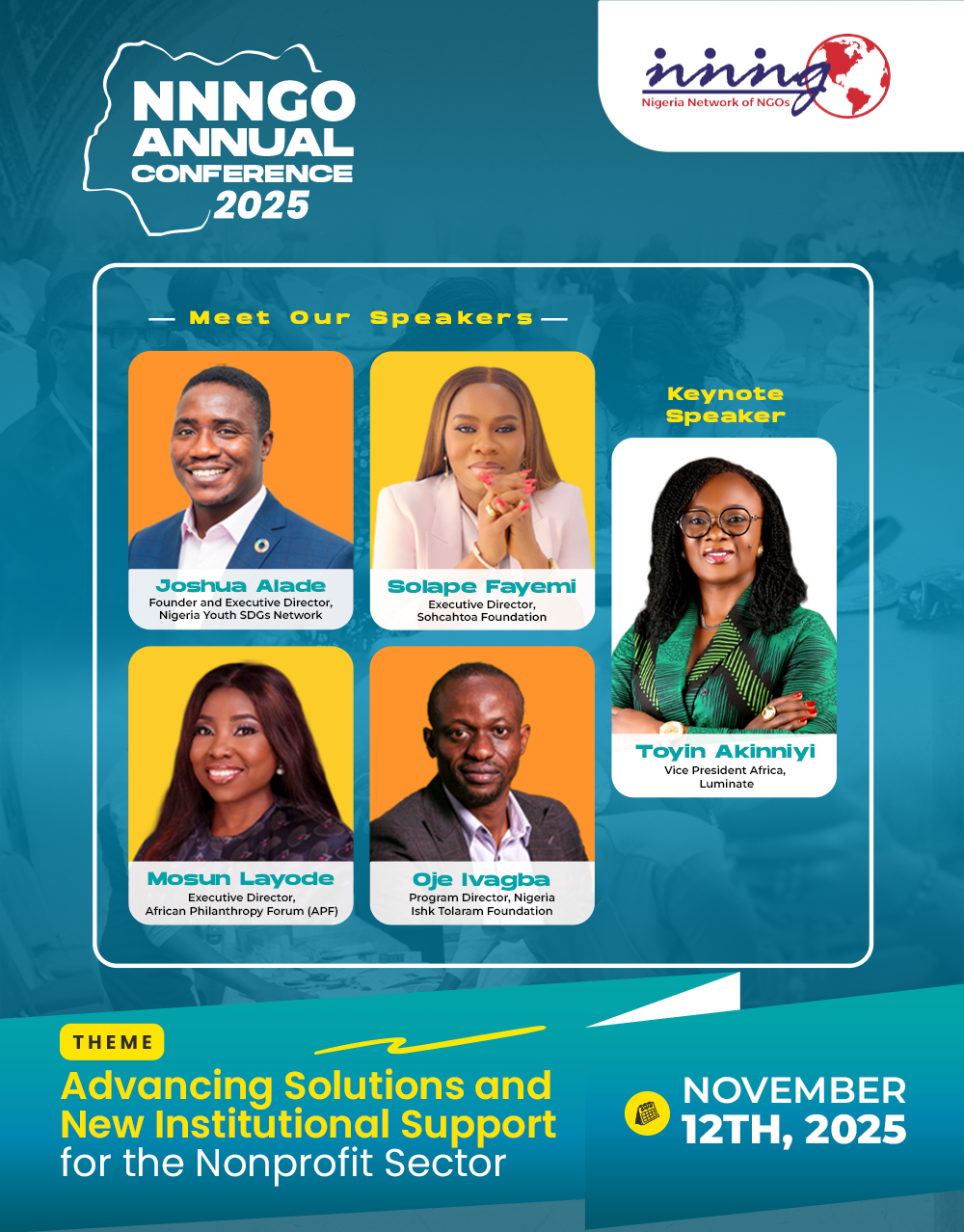
NNNGO Annual Conferene 2025
Theme: Advancing Solutions and New Institutional Support for the Nonprofit Sector
Date: November 12, 2025
post
[fluentform id=”3″]


Nigeria Network of NGOs urges nonprofit organizations to file Bi-Annual Statement of Affairs
Nonprofit Organizations have been reminded to file their Bi-Annual Statement of Affairs inline with the provisions of Section 845 (1) of the Companies and Allied Matters Act 2020 (CAMA) and Regulation 32 of the Companies Regulations 2021 (as Amended). This statement is required to cover periods of January 1st to June 30th with the timeline for filing of the Statement not later than July 15th and the second filing July 1st to December 31st with the timeline for filing of the statement not later than January 15th.
In a recent webinar hosted by the Nigeria Network of NGOs,member-organizations were urged to file their statements within this required time frame.
Based on the provisions of Section 845 (2), CAMA, Trustees have also been urged to file the statement within the respective timelines, for failure to file statement of affairs attract penalties. It is therefore crucial for NGOs to comply with the directives and file their Bi-Annual Statement of Affairs within the stipulated time frame and ensure to track records of all funds, which include income and expenditures.
The Bi-Annual Statement of Affairs is a means of promoting transparency and accountability amongst Non-governmental Organizations in Nigeria.
Bi-Annual Statement of Affairs is the mandatory compliance filings for Nonprofits registered in Nigeria under the CAMA 2020, Section 845.
How To File: Download the Form on CAC Website and fill in the details accordingly. Submit the filled form to – biannualstatementit@cac.gov.ng
The next filing, which is the second filing is January 15, 2024.
NGO Clearance Compliance Flow Chart For Clearing Humanitarian Charitable Items into The Federal Republic of Nigeria 2021
NGO Clearance Compliance Flow Chart For Clearing Humanitarian Charitable Items into The Federal Republic of Nigeria 2021
As part of efforts to ensure ease of shipping for charitable/humanitarian goods, the Technical Working Group set up by the Office of the Deputy Senate President and Nigeria Shippers Council produced this flow chart as part of its first step of activities towards developing a Standard Operating Procedure. The flow will be available on the websites of all agencies involved.
As part of efforts to ensure ease of shipping for charitable/humanitarian goods, the Technical Working Group set up by the Office of the Deputy Senate President and Nigeria Shippers Council produced this flow chart as part of its first step of activities towards developing a Standard Operating Procedure. The flow will be available on the websites of all agencies involved.
Nonprofit Job Advert
[vc_row][vc_column][nd_options_post_grid nd_options_layout=”layout-12″ nd_options_qnt=”10″ nd_options_id=”10″ nd_options_category_slug=”nonprofit-job-advert”][/vc_column][/vc_row]
Petition Against Defamation
On Wednesday 28 July 2021, a research report listing the Nigeria Network of NGOs as a “fake civil society organisation and pro-government NGO” was published by Matthew T Page a non-resident Fellow at Carnegie Endowment based in Washington DC.
As part of a formal response, we call on Civil Society Organisations in Nigeria and across the world, our members, partners, donors and stakeholders to stand with us against this publication essentially because it goes against our mission, vision and purpose as an organisation. This report presents a completely wrong image of the Network and its claims, based on lack of evidence or sufficient information as is seen from the dearth of information about the Network within the report.
We urge that you sign this petition in support of NNNGO as we take a stand against these defamatory allegations
[emailpetition id=”1″]
CALL FOR FACILITATORS
Background
The Nigeria Network of NGOs (NNNGO) is the first generic membership body for civil society organisations in Nigeria that facilitates effective advocacy on issues of poverty and other developmental issues. Through its civil society reforms and strengthening programme, it has constructively engaged regulators and the National Assembly on laws guiding the operations of civil society organisations to improve the operational environment for nonprofits including improving the sector’s transparency and accountability.
With the support of Google.org, the Network is currently embarking on a project to build the capacity of nonprofits in Nigeria. It is aimed at addressing the findings (capacity gaps) identified in the Nonprofit Assessment research undertaken by the Nigeria Network of NGOs including the building of digital skills by nonprofit board, executive directors and staff.
NNNGO is therefore soliciting interest from experienced facilitators in the nonprofit sector (preferably Executive Directors), to work with the Network in training nonprofit board, Executive Directors and staff, in her events.
Scope of Work
The facilitator will work with NNNGO team to carry train nonprofits on three key events viz- Executive Director’s hangout, nonprofit management training and a board conference.
Specifically, the key areas for the events are:
i. Executive Directors hangout: interested facilitators should have experience in Leading nonprofit, Organisational concerns (such as staffing issues, board management, organisational management, time management, planning and strategy, fundraising and succession planning).
ii. Nonprofit management training: the facilitator should have broad insights on key current management issues for nonprofit organisations. Strategic planning, work planning, budgeting, communications, nonprofit friendly digital tools, skills and apps, reporting-narrative and financial management.
iii. Board conference: practical tips will be provided on nonprofit governance- board job description, terms of reference and ways of working, board governance codes and standards, understanding nonprofit audits and measuring the executive director’s performance.
Output and Deliverables
The facilitator will work with the NNNGO team in producing the following key deliverables:
i. A power point presentation and tools on related topic
ii. Delivery of training based on the power point presentations.
iii. A report on the event
iv. Analysis of an end of event evaluation survey
Duration and Time Schedule
The facilitator can only work in one location of an event, and it is expected to indicate an area of interest that can be handled properly. The events will take place from March through July.
Location and Dates for the events
i. Executive Director’s Hangout
• Lagos: March 17, 2021
• Kano: April 14, 2021
• Benin: April 20, 2021
ii. Nonprofit Management Training
• Port-Harcourt: May 3 – 7, 2021
• Abuja: May 23 – 27, 2021
• Ibadan: June 14 – 16, 2021
iii. Nonprofit Board Conference
• Lagos: July 15, 2021
Reporting
The facilitator shall report through the Project Officer to the Executive Director on the assignment and on all other logistics until the deliverables are submitted as required.
Qualification
The facilitator should have vast knowledge and experience in the nonprofit sector, preferably an executive director or top civil society personnel with experience on:
i. Leading a nonprofit
ii. Governance strategy and structure
iii. Human resource, personnel and management
iv. Project management, monitoring and evaluation
v. Funding and organizational sustainability
vi. Use of technology
Application Process
Interested individuals should complete this form and upload a copy of their Curriculum Vitae by March 12, 2021.
For further clarification, you may contact:
Chidinma Okpara at: chidinma.okpara@nnngo.org
To Apply, click on the link below
https://docs.google.com/forms/d/e/1FAIpQLSfLIw9z0hAg5s_rnPWgaSseUtcKzmo17ZZv-YvRhPu7I1MgeA/viewform