
Strong institutions are the foundation of a vibrant, accountable civil society. We build them, deliberately, one organisation at a time.
For close to a decade, the Nigeria Network of NGOs (NNNGO) has been quietly transforming how civil society organisations across Nigeria’s six geopolitical zones prepare for, and thrive in, an increasingly complex operating environment. What began as targeted regional workshops on anti-money laundering standards in 2018 has grown into a comprehensive, network-driven capacity building ecosystem — one that strengthens governance, unlocks sustainable funding, protects digital rights, and amplifies civic voice from Maiduguri to Port Harcourt, from Abuja to Ibadan.
This is not a story of workshops delivered for their own sake. It is the story of a national membership body recognising that strong institutions are the foundation of a vibrant, accountable, and impactful civil society — and acting on that belief with consistency, strategic partnerships, and deep respect for the diversity of Nigeria’s nonprofit sector.
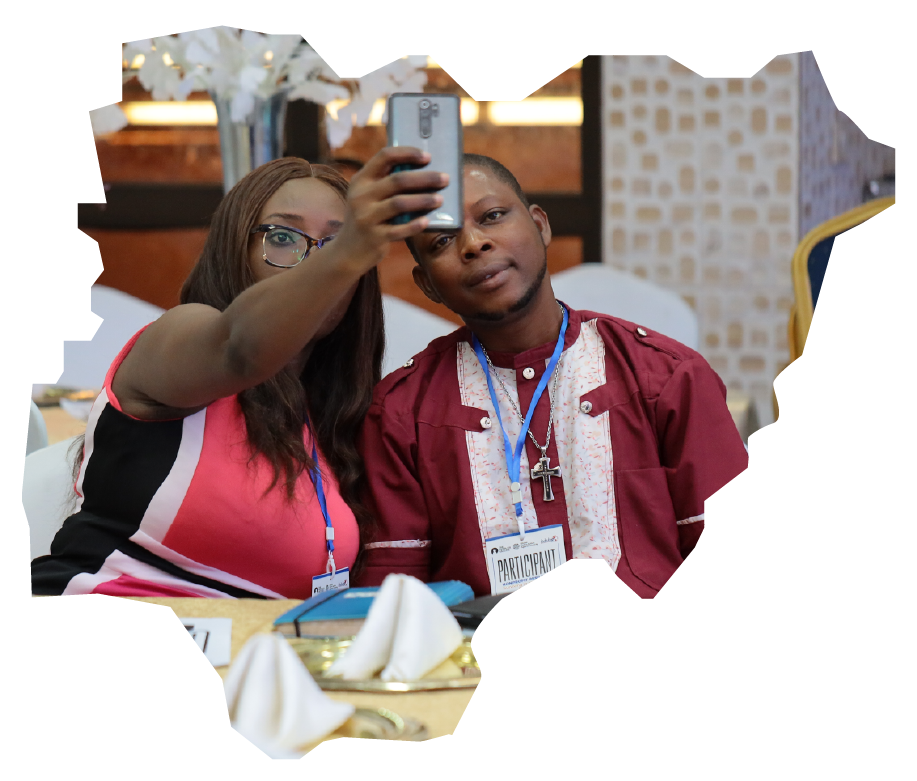

What Capacity Strengthening Really Means
In the Nigerian context, capacity strengthening is not a generic training exercise. It is a deliberate investment in the institutional maturity, regulatory resilience, and operational excellence of organisations that serve communities every day. It means equipping CSOs to navigate the Companies and Allied Matters Act (CAMA) 2020, the new Tax Reform Acts of 2025, FATF Recommendation 8 on nonprofit organisations, and rising expectations around transparency, digital security, and measurable impact.
Our approach draws on global best practice while staying firmly rooted in Nigerian realities: regional diversity, resource constraints, regulatory complexity, and the imperative of self-regulation.
As the Council of Nonprofits in the United States puts it: capacity building is whatever is needed to bring a nonprofit to the next level of operational, programmatic, financial, or organisational maturity. We build ours around that idea.
Our Distinctive Approach
NNNGO does not simply convene workshops. We have built a deliberate methodology that maximises reach, relevance, and lasting change.
Network and coalition approach
- Network and coalition approach. We work through and with state and zonal coalitions, so knowledge cascades far beyond the participants in the room. This model proved especially powerful in our SCALE Project work on self-regulation and in building coalitions for regulatory harmonisation.
Zonal and contextual delivery
- Zonal and contextual delivery. Workshops are tailored and delivered across geopolitical zones — North East, North West, South East, South West, and beyond — addressing specific regional realities while maintaining national coherence. Our 2026 Tax Law zonal series is the clearest recent example.
Practical, actionable learning
- Practical, actionable learning. Every session produces tools participants can use immediately: templates, checklists, action plans, and peer accountability mechanisms. Our focus is never abstract theory but concrete organisational improvement.
Multiplier, mentoring and sustained support
- Multiplier, mentoring and sustained support. Train-the-Trainer components, peer review mechanisms, and structured mentoring and coaching build lasting institutional memory and behavioural change — a dimension significantly strengthened through support from Google.org, which is enabling NNNGO to pair high-quality training with ongoing peer learning, mentoring, and coaching for nonprofit leaders across the country.
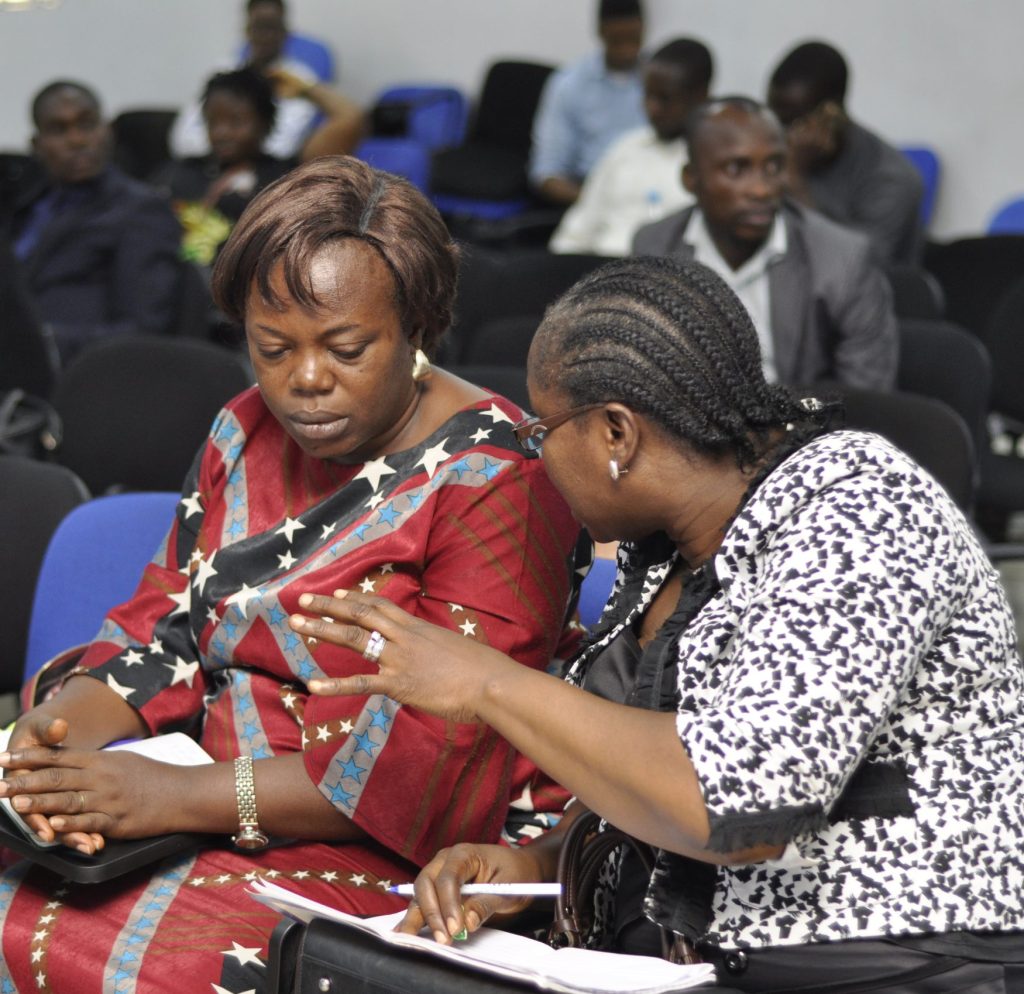
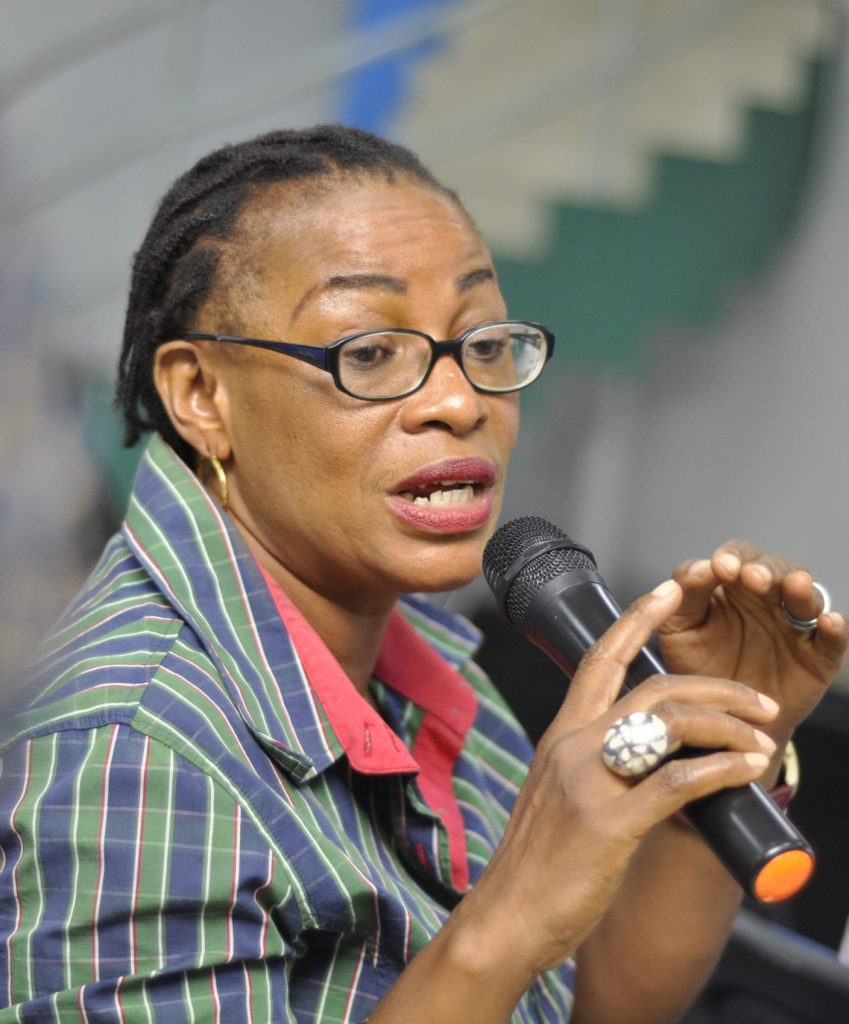
Our Track Record at a Glance
Capacity strengthening at NNNGO is not a side activity — it has been core to our work for as long as we have existed, at a scale few sector bodies in Nigeria can match.
1,772 nonprofit organisations trained physically across 32 states
- 1,772 nonprofit organisations trained physically across 32 states between 2017 and 2025 alone, in nonprofit management, financial management, governance, resource mobilisation, and nonprofit communications — using training materials developed in-house and tailored to the specific gaps Nigerian nonprofits face.
Over 1,500 civil society organisations trained
- Over 1,500 civil society organisations trained through online sessions to date, strengthening their capacity to deliver on their own missions.
62 senior managers
- 62 senior managers from nonprofits across 9 states (Lagos, Ogun, Rivers, Plateau, Oyo, Adamawa, Nasarawa, Delta and Abuja) took part in our peer-review initiative — physically assessing one another against a shared questionnaire and checklist to identify gaps and reinforce best practice.
20 years
- 20 years running Nigeria’s largest and only convening platform on nonprofit issues: our annual conference, drawing an average of 250–300 participants in recent years, and historically over 300 organisations from 34 states in a single gathering.
First-ever Google.org Nonprofit Management Master Class
- In 2022, our Executive Director delivered the first-ever Google.org Nonprofit Management Master Class to an audience of over 5,000 at the Google for Africa event — carrying Nigerian capacity-building expertise onto a global stage.
Tools We have Built for the Sector
Capacity building isn’t only about workshops — it’s also about giving CSOs permanent, practical infrastructure they can return to at any time.
NOPSAT
- NOPSAT— a nonprofit organisational self-assessment tool covering governance, strategy, and structure.
DataPro
- DataPro — a data protection assessment tool built for the realities of Nigerian nonprofits.
Compliance Tool
- Compliance Tool — a regulatory compliance self-assessment platform.
The first nonprofit accounting software built by a nonprofit
- The first nonprofit accounting software built by a nonprofit (account.nnngo.org) — purpose-built financial management for the sector.
Nonprofit Operational Manual
- A published Nonprofit Operational Manual, freely available to the sector.
COVID-19 Action Tracker
- A COVID-19 Action Tracker, built during the pandemic to help CSOs monitor measures affecting freedom of assembly and association, alongside a nonprofit spending report and an AML/CFT advisory specific to the pandemic period.
These sit alongside deep, sustained regulatory relationships — with the Corporate Affairs Commission, the Financial Reporting Council, the Nigeria Revenue Service (formerly FIRS), the Special Control Unit Against Money Laundering (SCUML), and the National Planning Commission — all of whom have participated in and lent credibility to NNNGO’s workshops and conferences over the years.

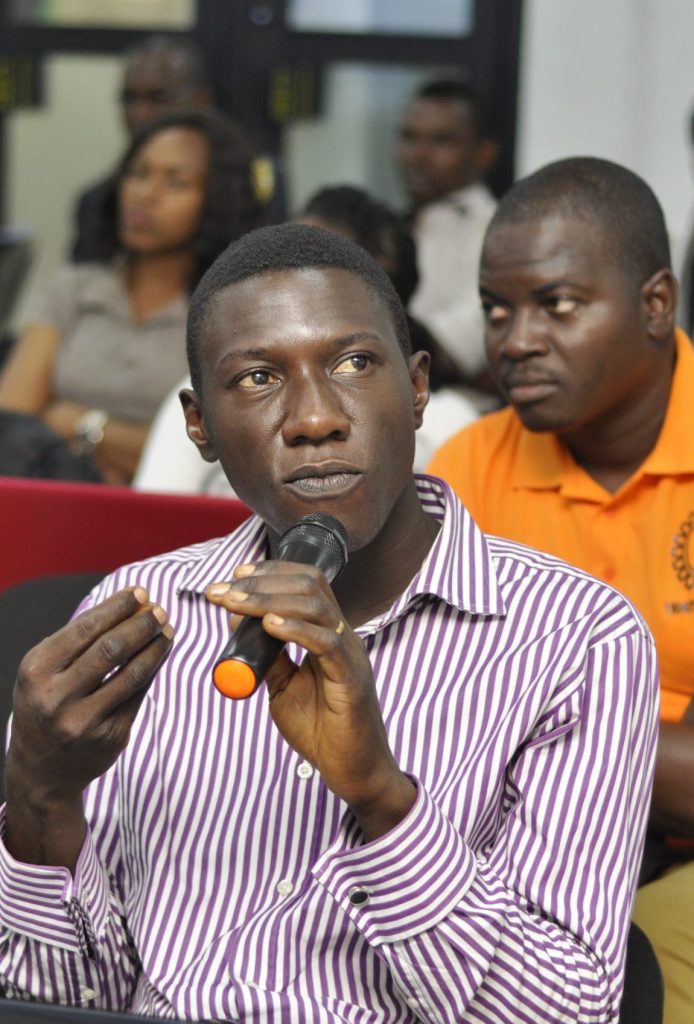
Five Strategic Pillars of Our Work
Our capacity strengthening work has crystallised around five interconnected pillars, each grounded in real programmes from our archive.
1. Regulatory Compliance and Governance
- Regulatory Compliance and Governance
Regulatory fluency was our starting point. Our earliest major interventions, in January 2018, focused on anti-money laundering and counter-terrorism financing (AML/CFT) standards for CSOs — helping organisations understand and prepare for FATF Recommendation 8 assessments. That work continued through the March 2021 Borno State workshop delivered with ICNL and reached new scale in May 2026 with a multi-zonal Tax Law Provisions capacity building series delivered with HBS Nigeria across the North East, North West, and South East.
Governance strengthening has run in parallel. Our 2019 regional workshops on nonprofit governance, strategy, structure, and board database management laid essential groundwork, directly feeding the broader push for self-regulation — most visibly in the March 2023 SCALE Project workshop in Ibadan on the Harmonised Code of Conduct, which brought together 27 physical and 17 online participants to advance coalition-based self-regulation.
2. Resource Mobilisation and Sustainability
- Resource Mobilisation and Sustainability
Sustainable funding remains one of the most persistent challenges facing Nigerian nonprofits. We’ve responded with practical, high-impact interventions: the August 2021 Accessing International Grants Workshop, the April 2024 workshop on fundamental grant writing skills, and the August 2024 session on Accessing Grants from Foundations delivered in partnership with the Ishk Tolaram Foundation — together equipping hundreds of organisations with actionable skills in proposal development, budgeting, and donor engagement.
A particularly strategic initiative was the March 2024 workshop with Forus International on deepening engagement between civil society organisations and Public Development Banks, helping CSOs understand and access new financing pathways for sustainable development. The comprehensive November 2024 Deloitte “Next-Level Nonprofits” one-week programme dedicated an entire session to fundraising strategies, reinforcing this pillar with world-class expertise.
3. Organisational Development and Leadership
- Organisational Development and Leadership
Strong organisations require strong internal systems and leadership. Our 2019 workshops on nonprofit needs assessment (using the NOPSAT tool) and board database management addressed foundational weaknesses directly. The November 2024 Deloitte series went further, dedicating full days to Strategic Planning for Nonprofits and Monitoring & Evaluation — giving participants frameworks they could apply immediately to sharpen focus and evidence-based decision-making.
Brand Marketing and Communications for Nonprofits (delivered with Deloitte in September and November 2024) recognised that visibility and storytelling are strategic capacities, not afterthoughts — a strong brand helps CSOs attract donors, engage volunteers, and build long-term legitimacy. Google.org’s support for capacity building strengthens this pillar further, combining training with peer review, mentoring, and coaching so that learning translates into sustained organisational improvement rather than one-off events.
4. Digital Rights, Safety and Innovation
- Digital Rights, Safety and Innovation
As civic space has moved increasingly online, we have moved with it. The November 2024 Deloitte session on AI for Nonprofits introduced organisations to practical applications while encouraging responsible adoption. That thread culminated in the landmark June 2026 Train-the-Trainer Workshop on Digital Rights, Safety and Security, held in Abuja — a deliberate investment in multiplier capacity so participating organisations could replicate the training within their own networks.
Earlier, the January 2024 UPR Process Engagement Workshop, delivered with the Small Media Foundation, equipped 36 CSO leaders in Abuja with the skills to use the Universal Periodic Review as a powerful advocacy tool for digital rights — showing how digital capacity and advocacy intersect in practice.
5. Advocacy, Policy and Civic Space
- Advocacy, Policy and Civic Space
We have never treated capacity building as purely technical — it has always been linked to strengthening the enabling environment for civil society itself. The March 2023 SCALE workshops in Ibadan directly supported conversations on self-regulation and policy influence. The September 2025 Capacity and Consultative Workshop on the Policing Protest Toolkit addressed a pressing civic space concern. And the February 2026 launch of our Journalism Fellowship — a 12-month paid programme focused on civic space, human rights, and CSO work across the North East, South West, and South East — represents one of our most ambitious investments yet in narrative power and evidence-based advocacy.
Milestones Along the Journey
2018–2019 — Foundations.
-
2018–2019 — Foundations. Regional AML/CFT workshops and governance/needs-assessment programmes established NNNGO as a serious convener of practical capacity support.
2021 — Deepening reach.
2021 — Deepening reach. FATF-focused work in Borno (with ICNL), an international grants workshop, and the EU-ACT-supported programme on harmonising regulatory frameworks at the sub-national level (with the British Council) demonstrated both geographic reach and policy relevance.
2023 — Self-regulation and legal strength.
2023 — Self-regulation and legal strength. The Ibadan SCALE workshop on the Harmonised Code of Conduct and a Thomson Reuters Foundation partnership on nonprofit legal matters marked a maturation in both self-regulation and legal capacity.
2024 — Scale and partnership excellence.
2024 — Scale and partnership excellence. The landmark one-week Deloitte “Next-Level Nonprofits” programme (covering fundraising, strategic planning, M&E, AI, and brand and communications), the Forus Public Development Banks engagement, and the UPR advocacy workshop made this our most ambitious, multi-dimensional year to date.
2025–2026 — Institutionalisation, mentoring and systemic impact.
2025–2026 — Institutionalisation, mentoring and systemic impact. National validation of CSO mapping research with WACSI, a comprehensive zonal Tax Law series, the creation and validation of Nigeria’s most extensive database of private foundations and Host Community Development Trusts with the TY Danjuma Foundation, the Digital Rights Train-the-Trainer programme, and new support from Google.org for training combined with peer review, mentoring and coaching — marking a clear shift toward deeper, more sustained, and relational capacity development.

Milestones Along the Journey
The true measure of this work lies not in the number of workshops held, but in the change it has catalysed.
- Policy influence.
Our sustained capacity and advocacy work contributed to key reforms including the Companies and Allied Matters Act 2020, and informed validation processes for the Nigeria Tax Act 2025 across all 36 states and the FCT. - Scale of direct training.
1,772 nonprofits trained across 32 states between 2017 and 2026, and over 1,500 CSOs trained cumulatively through physical and online sessions — figures that place NNNGO among the largest direct capacity-building providers to Nigerian civil society. - Transparency infrastructure.
In partnership with the TY Danjuma Foundation, we developed and validated Nigeria’s most comprehensive database of 81 private and corporate foundations and 95 Host Community Development Trusts — a public good that strengthens accountability and resource mapping for the entire sector. - Self-regulation momentum.
The 2023 Ibadan workshops and related SCALE Project work advanced adoption of the Harmonised Code of Conduct and coalition-based approaches to self-regulation. - Knowledge multiplication and sustained support.
Train-the-Trainer models, peer review processes — including our 62-manager, 9-state peer review initiative — and structured mentoring and coaching, significantly enhanced through Google.org’s support, ensure that investment in individual leaders translates into lasting organisational change and ripple effects across networks. - Cross-sector legitimacy.
Partnerships with Deloitte, EU Delegation to Nigeria, Forus International, Palladium, Thomson Reuters Foundation, ICNL, HBS Nigeria, the TY Danjuma Foundation, and Google.org have brought world-class expertise to Nigerian CSOs while elevating the sector’s credibility with government, the private sector, and international actors.


Join the Journey
Whether you lead a civil society organisation seeking practical skills and sustained mentoring support, represent a foundation or development partner interested in co-creating transformative capacity initiatives, or are a journalist or researcher committed to evidence-based storytelling about civic space — we invite you to connect with us.
Get in touch: nnngo@nnngo.org