Security Note from Nigeria Network of NGOs.

Following the issuance of security alerts by the Governments of the United States and United Kingdom and the subsequent withdrawals of their citizens from Abuja, Nigeriaโ€™s capital, we encourage our members across the country and in Abuja specifically to please stay alert and vigilant to any perceived threat to their lives and properties.

While the Inspector General of Police, IGP Usman Baba has assured Nigerians that there is no imminent threat in Abuja or anywhere else in the country, we enjoin members to minimize travels, physical gatherings- conferences and workshops, or campaigns where possible at this time until all indications of impending chaos subside.

We urge members to develop and execute security plans for their organisations including large gatherings. In case there are donor supported events you have planned in Abuja, please reach out to your donors asking for a delay in implementation or change in venue to other parts of the country. Remember this will have cost implications that may need to be negotiated with your grant officer. Organisations based in Abuja may also consider a work from home policy in order to guarantee the safety of their staff.

We encourage CSOs to remain cautious and vigilant in public places especially where crowds gather, including conferences, workshops, places of worship, markets, shopping malls, hotels, bars, restaurants, football viewing centres, displacement camps, transport terminals (including train networks), government buildings, security, and educational institutions (schools, further education colleges and universities are all regular targets), and international organisations.

We encourage our members and their staff, especially within the FCT, to stay alert and report any suspicious or abnormal occurrence and persons to the Police through the following emergency lines as provided by authorities: 08032003913, 08061581938, 07057337653, and 08028940883

Tips for Navigating a Terrorist Attack

These tips apply whether youโ€™re in a public or private space.

Before an Incident

  • Be vigilant. Terrorist attacks usually happen in public places. Keep a watch for suspicious behaviour, vehicles, or packages.
  • If you have any fears or suspicions, tell the police.
  • When youโ€™re in buildings and on public transport, make sure you know where the emergency exits are.

ย During an Incident

  • We know it is hard to do but try your best to remain calm and patient but stay as alert as you can. Find the safest way to leave the area. Move as quickly and calmly as you can. If you cannot find an exit, find a good hiding spot, and stay there till you are sure it is safe to leave.
  • If thereโ€™s an explosion outside a building or you hear gunshots, stay inside or as far from the explosion area as you can. Keep away from windows, lifts, and outside doors in case thereโ€™s another bomb nearby.
  • If thereโ€™s a fire, stay low to the floor and exit as quickly as possible. Cover your nose and mouth with a wet cloth if you can. If a door is hot to the touch, donโ€™t open it.
  • If you saw the explosion or any suspicious behaviour, tell the police.
  • If the event occured near/close to you, carefully but thoroughly check your body for injuries.

ย After an Incident

  • Help others withย first aidย if itโ€™s safe to do so. Tell the police if you saw anything that might be useful.

Source: British Red Cross

Do not hesitate to reach out to us at {email] and [phone number] in case of an emergency.

Sincerely,

The NNNGO Security in the Field Team

POLICING AND CIVIC SPACE

Chapter 4 of the 1999 Constitution of the Federal Republic of Nigeria stipulates the fundamental rights of Nigerian citizens. This includes the right to life; the right to dignity of human persons; the right to freedom of expression and the press; the right to peaceful assembly and association; right to freedom of movement; among others1.

The National Human Rights Commission (NHRC) of Nigeria was established by the National Human Rights Commission Rights 1995 (as amended) in line with Resolution 48/134 of the United Nations General Assembly which enjoins all member states to establish independent National Institutions for the promotion, protection and enforcement of human rights. The Commission serves as an extra-judicial mechanism for the respect and enjoyment of human rights. It also provides avenues for public enlightenment, research, and dialogue to raise awareness on Human Rights issues2.

Globally, Nigeria is a member of the United Nations (UN) and as such, is subject to the scrutiny of the Universal Periodic Review (UPR) under the UN Human Rights Council3. According to the CIVICUS Monitor, the Nigerian civic space is currently rated as Repressed4.

This means that the democratic freedoms of Nigerian citizens in relation to the freedom of expression, peaceful assembly, and association are significantly constrained.

Policies to Strengthen Civil Society at the Sub-national Level.

Establishing a civil society organisation (CSOs) as a founder or manager, involves choosing between being an incorporated entity registering with the Corporate Affairs Commission (CAC) or unincorporated under the Freedom of Association, as guaranteed by the Constitution. But recent years have seen new difficulties for CSOs, in the form of challenges to registration at the state level. Organisations working with women, children and youths, interested in working with government at the sub-national level are required to register with relevant Ministries.

Other emerging challenges are those around the legitimacy of civil society sector itself. Organisations within the sector are said to ignore their vision and mission, abuse their nonprofit status and have had their accountability and transparency questioned, hence, the need for more regulations. For individuals working in the civil society sector and interested in bringing development to the doorsteps of the common man, these allegations are extremely concerning.

Given its commitment to strengthening civil society regulations across the country, the Nigeria Network of NGOs, and the European Union Agentโ€™s for Citizen-Driven Transformation Programme (EU-ACT) project have given a high priority to understanding civil society regulations at the sub-national level and offer policy alternatives to enabling the operations of CSOs at the sub-national level.

One-Stop Shop for Civil Society Regulations at the Sub-National Level

BACKGROUND

This issue brief is developed to be at the forefront of thinking and building consensus on what a one-stop shop
means to civil society regulatory policies at the sub-national level. Recently civil society organisations have
touted one-stop shops as one of the solutions to the myriad of regulatory directives emanating from ministries
and agencies of governments across different Nigerian states.

Regulatory delivery for civil society at the sub-national level is usually not known to be hinged on any state
legislated law, however, research has shown that both the Child Rights Act and Violence Against Persons
Prohibition Act enacted at the state level provide a legal basis for civil society regulations in the areas of
children and women issues. One frequent lament by organisations is the difficulty of partnering with the
government at the state level without registering with the agency in focus, accessing relevant information on
administrative procedures relating to these registrations and their legal basis is often a challenge.


Download the document here

NGO Clearance Compliance Flow Chart For Clearing Humanitarian Charitable Items into The Federal Republic of Nigeria 2021

NGO Clearance Compliance Flow Chart For Clearing Humanitarian Charitable Items into The Federal Republic of Nigeria 2021
As part of efforts to ensure ease of shipping for charitable/humanitarian goods, the Technical Working Group set up by the Office of the Deputy Senate President and Nigeria Shippers Council produced this flow chart as part of its first step of activities towards developing a Standard Operating Procedure. The flow will be available on the websites of all agencies involved.

Fill this form to download the NGO Clearance Compliance Flow Chart For Clearing Humanitarian Charitable Items into The Federal Republic of Nigeria 2021


List of NGOs in Nigeria

Searching for a well-updated list of NGOs in Nigeria can be very difficult but many thanks to the Nigeria Network of NGOs (NNNGO) which is the first generic membership body for civil society organisations in Nigeria with over 3495 organisations ranging from small groups working at the local level, to larger networks working at the national level.


The list of NGOs in Nigeria facilitated by Network which charged with the objective of identifying, registering, coordinating, building capacity, and mobilizing civil society organisations to promote interconnectivity and bring equity, justice, peace, and development to grassroots communities throughout Nigeria, including the implementation of the Sustainable Development Goals (SDGs).


The list of NGOs in Nigeria registered with NNNGO is grouped according to the states, thematic areas, and alphabetical order which is stated below: NGO’s Directory by State, NGO’s Directory by Thematic Area, and NGO’s Directory by Alphabetical Order.


The followings are the list of NGOs in Nigeria grouped by states

ABIA

  • ABIA NORTH INDUSTRIAL DEVELOPMENT INITIATIVE
  • AFRICA HOPE ALIVE INITIATIVE
  • AFRICOMMUNITY TECHNOLOGY DEVELOPMENT CENTER
  • ANNABELLES BOGI DEVELOPMENT INITIATIVE (ABDI)
  • ASA-AMATOR AMATEUR WOMEN COUNCIL
  • CECILIA NKEMAKOLAM FOUNDATION
  • CITY TAKERS NETWORK
  • DCOM WORD ACADEMY
  • DESIRABLE-IMPACT
  • DEVELOPMENT GENERATION AFRICA INTERNATIONAL
  • DICK TIGER IHETU FOUNDATION
  • DIPLOMAT YOUTH ORGANISATION

Kindly read more here


Below is the list of NGOs in Nigeria grouped by Thematic Areas

ADVOCACY

  • ABONNEMA YOUTH ADVOCACY MOVEMENT
  • AFRICAN VULNERABLE WELFARE EMPATHETIC AND EGALITARIAN SOCIETY OF NIGERIA
  • ANPEZ CENTRE FOR ENVIRONMENT AND DEVELOPMENT
  • ELFRIQUE SOLUTIONS LIMITED
  • FEDERATION OF OGONI WOMEN
  • IDAMA BELEMA ERE
  • INTERNATIONAL SOCIETY FOR HUMAN RIGHTS AND SOCIAL JUSTICE
  • KANO NETWORK OF NGOS.
  • KEEPING IT REAL (KIR) FOUNDATION
  • PRIVATE INVESTORS CLUB
  • PROJECT NEW NATION

Kindly read more here

The list of NGOs in Nigeria according to Alphabetically order

  • Abibimman Foundation
  • Abraham Adesanya Foundation
  • Abrahamโ€™s Children Foundation (ACF)
  • Abraham Omuya Foundation
  • Abia North Industrial Development Initiative
  • Able Reading Group
  • Abuja Children and Youth International Association of Nigeria (ACYIAN)
  • Abuja Metro Junior Chamber
  • Academic Associate Peace Work
  • Academic Associates
  • Accountability Commitment For Innovative Optimism & Excellence Foundation
  • Ace Development Initiatives
  • Achievers Development Centre
  • Achieversโ€™ Multipurpose Cooperative Society

Kindly read more here

list of NGOs in Nigeria

The Nigeria Network of NGOs welcomes Ishk Tolaram Foundation As a Member of The Network

Announcing our newest member-organisation Ishk Tolaram Foundation

—————————————————-

The Nigeria Network of NGOs (NNNGO) is pleased to announce the addition of Ishk Tolaram Foundation to its membership.


This development will raise the Networksโ€™ profile and signal the start of a relationship that will further strengthen our efforts at building capacity of organisations across the third sector.


Oyebisi, B. Oluseyi, Executive Director, Nigeria Network of NGOs welcomed Ishk Tolaram Foundation to the Network noting that โ€œNNNGO is excited at Ishk Tolaram Foundationโ€™s decision to join our membership in the sponsor category as it highlights the value the Foundation places on cross-sector partnerships in strengthening the work of national associations like NNNGO to deliver critical initiatives, projects and programmes for the future of the nonprofit sector.โ€


Thank you @ishktolaram for the important work you do 🌍over as we continue to work together for #sustainabledevelopment

NNNGO welcomes the non inclusion of nonprofits as designated nonfinancial institution in the money laundering and terrorism prevention laws.

NNNGO welcomes the non inclusion of nonprofits as designated nonfinancial institution in the money laundering and terrorism prevention laws.


Both the Money Laundering (Prevention and Prohibition) ACT, 2022 and Terrorism (Prevention and Prohibition) ACT, 2022 have removed nonprofits from its definition of designated nonfinancial institutions (DNFI) after years of advocacy.


LAGOS, Nigeria. May 18, 2022/NNNGOโ€”The Nigeria Network of NGOs welcomed the non inclusion of nonprofits in the definition of designated nonfinancial intuitions by the Nigerian government in both the Money Laundering (Prevention and Prohibition) ACT, 2022 and Terrorism (Prevention and Prohibition) ACT, 2022 representing an important win for the nonprofit sector and a bold step in creating an enabling environment for the operations of civil society organisations in Nigeria.


โ€œI would like to express my excitement and congratulate the National Assembly and Federal Government for creating an enabling environment for civil society to thrive by removing nonprofits from the DNFI list. The inclusion of our sector on the list has hindered the operations of many organisations. With this non inclusion a regulatory burden is taken off organisations in the areas of monthly cash transaction reports and SCUML examination visits. The atmosphere for our work from the moment these laws were signed by Mr. President remains positiveโ€ NNNGO Executive Director, Oyebisi. B. Oluseyi said in the early hours of Wednesday morning after a careful review of both laws.


There have been some difficult moments in this lengthy advocacy which has seen the Network engaging with regulators, evaluators and the National Assembly from the 8th and 9th Assemblies in line with the Financial Action Task Forceโ€™s (FATF) Recommendations and its interpretative notes. The work also done by our friends at Spaces for Change (S4C) and our regulators at the Special Control Unit on Money Laundering in getting to this point is commendable. โ€œI believe this win, driven largely by outcomes of the mutual evaluation for Nigeria demonstrates the countryโ€™s ability to focus on its state- building priorities and is an opportunity to improve civic space,โ€ Oyebisi said.


โ€œNow its time for other African countries especially countries using the FATF Recommendations to shrink civic space to learn from Nigeria and to work on critical national priorities that still face civil societyโ€™โ€™ he added. โ€œThereโ€™s much work to be done and we look forward to being the Special Control Unit on Money Launderingโ€™s (SCUML) partners in addressing the vulnerabilities of the sector to money laundering and terrorism financingโ€.


–End—

For further information
Oyindamola Aramide
Communications Lead, Nigeria Network of NGOs
oyindamola.aramide@nnngo.org
+234 906 946 0107


About the Nigeria Network of NGOs
NNNGO is the first generic membership organisation for nonprofits in Nigeria dedicated to improving the operational environment for nonprofits. NNNGO brings together more than 3,400 nonprofits from around the country focused on education, health, environment, gender, agriculture, social protection, youth, poverty, good governance, and other areas of progressing national development. Since 1992, NNNGO has worked to advance the common interests of the sector, providing programs that advance national development, civil society legitimacy, transparency, and accountability.

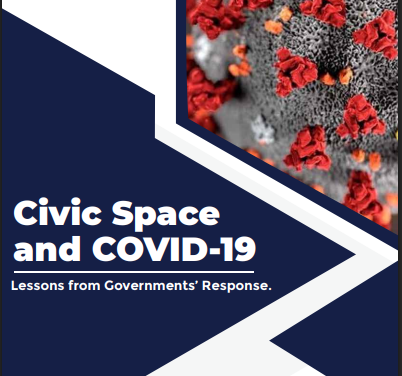
Civic Space & Covid-19

Introduction

The coronavirus pandemic has profound consequences for citizens and businesses across different Nigerian communities as the virus continues to shape local, national, and global agendas towards addressing the triple crisis of health emergency, economy, and political instability. As Nigeria emerged from the lockdown following the COVID-19 crisis, the Nigeria Network of NGOs has been documenting lessons from the measures and the impact they have on civic space. This report is based on two sets of evidence:

ย 

Open-source tracking of government measures through official press releases and statements issued by national and sub-national governments on their websites and social media handles.

ย 

Fill this form to download the document attached


The Nigeria Network of NGOs (NNNGO) is the first generic membership body for civil society organisations in Nigeria that facilitates effective advocacy on issues of poverty and other developmental issues. Established in 1992, NNNGO represents over 3495ย 

Do you have questions? Call or visit us.

+2349069460107

Plot 3 Sobanjo avenue, Idi-ishin Jericho Ibadan, Oyo, Nigeria.

15 Ramat Crescent, Ogudu GRA, Lagos, Nlgeria

nnngo@nnngo.orgย 

Newsletter

Get latest news & update

Connect With Us

ยฉ – Nigeria Network of NGO (NNNGO). All rights reserved.

Follow us on social media